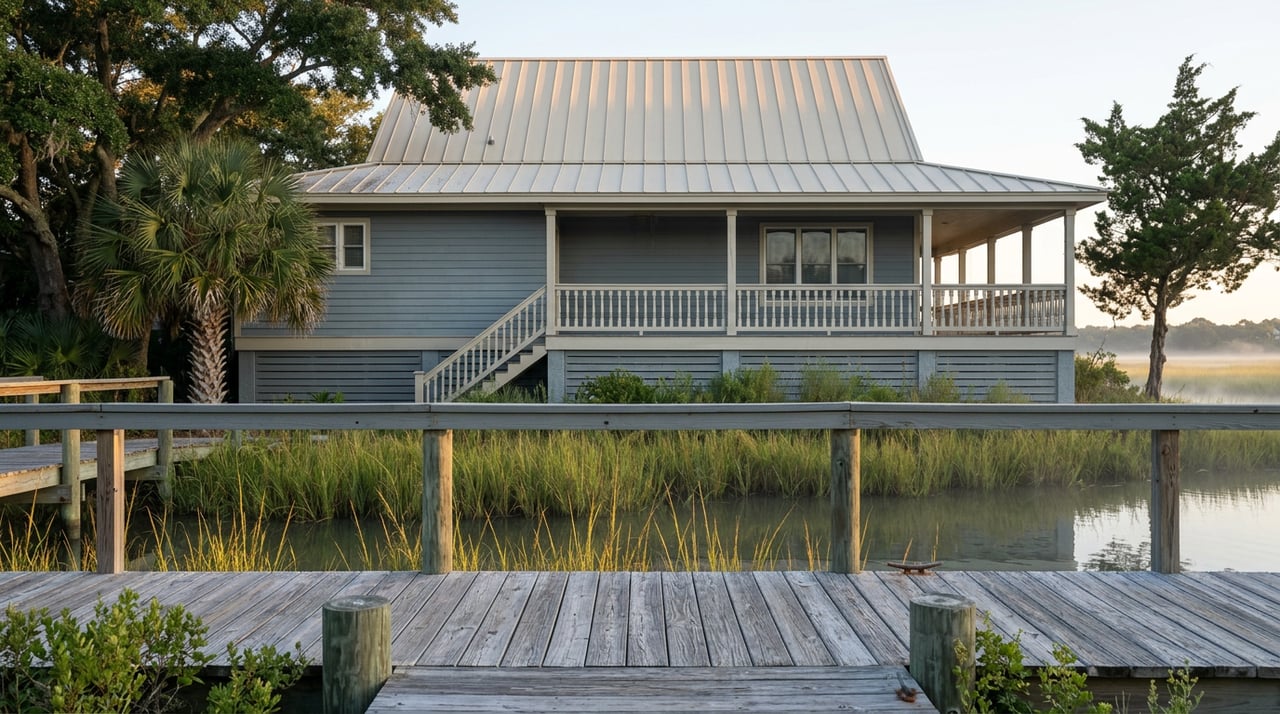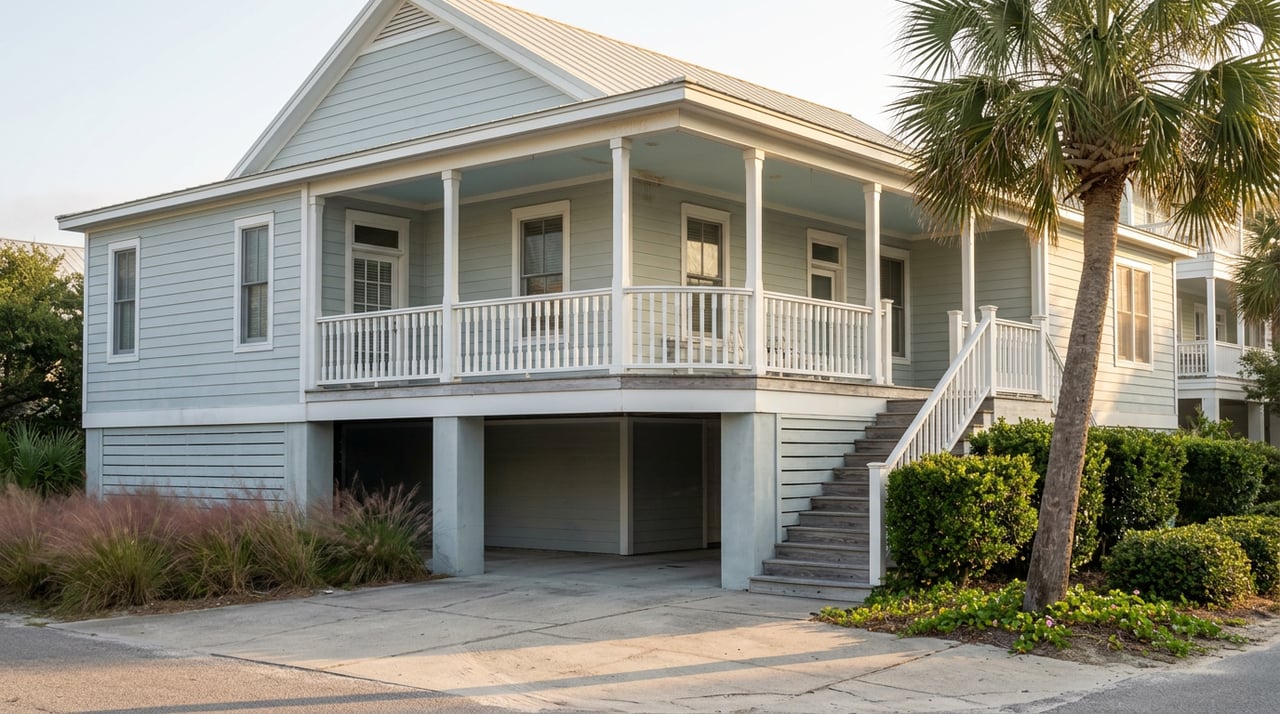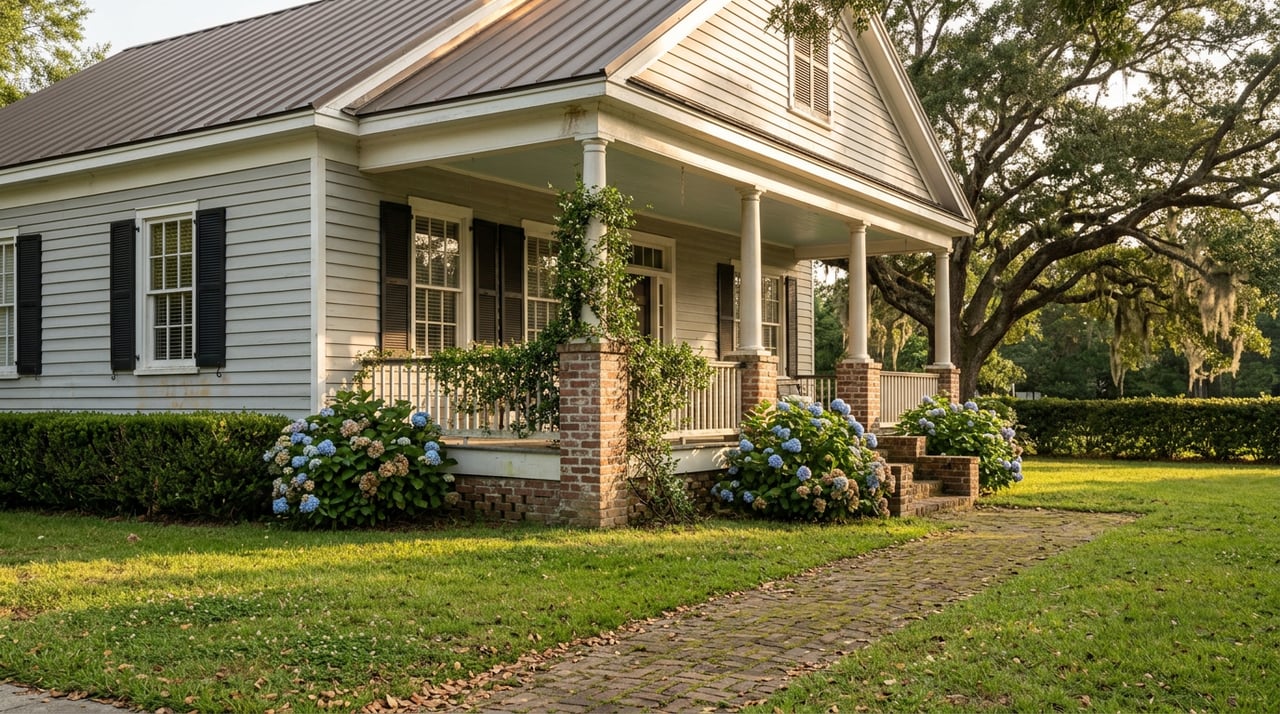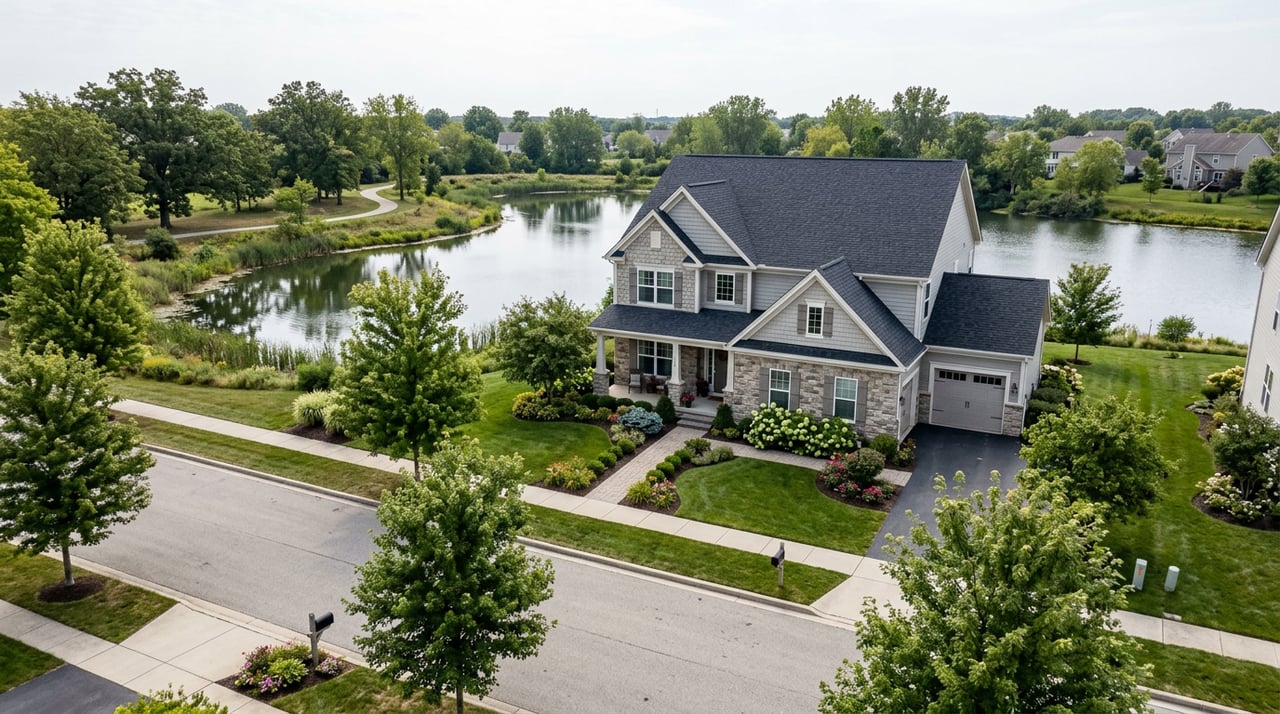
Ask an agent working Carolina Forest how many association bills a buyer should expect and you'll get a different answer depending on which subdivision they're picturing. Some buyers write one check a year. Others open their closing packet and find a second one they didn't budget for: a neighborhood HOA dues line and a separate master POA assessment, both mandatory, both recorded against the same address.
That surprise isn't a paperwork error. It's a structural feature of how Carolina Forest was built, and it's the same feature explaining something odd in this year's sales data: a community where single-family prices climbed through the second quarter of 2026 while condo prices in the same ZIP code fell. One neighborhood name. Two very different markets sitting underneath it. If you're comparing Carolina Forest to another stop on the Grand Strand using a single median number, you're comparing against a figure that's already an average of two things pulling in opposite directions.
One Neighborhood Name, Two Sets of Rules
Carolina Forest isn't a single subdivision. It's an unincorporated stretch of Horry County built out in phases over two decades, and inside it sit dozens of individually platted neighborhoods, each with its own homeowners association. The Farm. Avalon. Bellegrove. Trieste at Bella Vita. Waterbridge. Each has a board, a set of covenants, and its own dues structure.
Layered on top of many of those is a master property owners association, the kind large planned communities use to manage shared infrastructure across multiple neighborhoods at once. The distinction matters at closing: an HOA governs one subdivision's common areas and architectural standards, while a POA can span several subdivisions and sometimes commercial parcels too. Buy into a neighborhood that sits under both, and you owe both. Buy into one that only has the neighborhood-level HOA, and you don't.
That's the split that catches relocating buyers off guard, especially those coming from states where a single flat HOA fee is the norm. Some roads and streetlights inside Carolina Forest are privately maintained rather than county-owned, and whether that maintenance falls to the neighborhood HOA, the master POA, or another entity isn't something you can assume from one subdivision to the next. Drainage and stormwater systems carry the same ambiguity. None of this is disclosed on a listing sheet in a way that lets you compare it at a glance.
The math backs up why this stings more here than in some neighboring areas. Fee comparisons across the Grand Strand show that single-family neighborhoods around Conway and Longs tend to carry modest HOA dues, largely because those associations maintain common areas but not exterior structures, while larger master-planned communities like Carolina Forest carry higher fees because the amenity packages are bigger. A higher number attached to more amenities isn't a bad deal. It's a different deal, and the only way to know which one you're getting is to ask before you write the offer.
Before you do, get the answers to a short list of questions:
- Is this property subject to one association or two, and can I see both sets of recorded covenants?
- What specifically does each association fund: roads, drainage, a pool, a gate, insurance on shared structures?
- Is there a reserve study on file, or has the community been relying on special assessments to cover big-ticket repairs?
- If I plan to rent the property, what minimum lease term and registration rules does each association enforce?
A seller's disclosure won't always volunteer this. The recorded declaration will, and Horry County's Register of Deeds keeps it on file for exactly this reason.
The Median Price Is an Average of Two Different Trends
The fee structure isn't the only place Carolina Forest splits into two markets. The sales data from the second quarter of 2026 tells the same story from a different angle.
In Carolina Forest's ZIP code, 29579, the single-family housing market saw new listings drop from 837 in the second quarter of 2025 to 667 in the second quarter of 2026, a 20.3 percent decrease, according to data from the South Carolina Association of Realtors. Fewer new listings usually signals a market cooling off. Instead, the median sales price for single-family homes rose from $434,000 to $471,000 over the same window, an 8.5 percent increase. Listings fell. Prices climbed anyway.
Condos told the opposite story in the same footprint. The median condo price in Carolina Forest dropped from $215,000 in the second quarter of 2025 to $197,000 in the second quarter of 2026, a decline of just over 8 percent. Closed condo sales fell too, from 192 to 184, and the median days on market for those condos stretched sharply, from 102 days to 138 days.
Put those two trends inside one ZIP code and you get a median that means almost nothing on its own. A buyer who Googles "Carolina Forest median home price" and stops there has no way of knowing whether they're looking at a market where sellers are gaining leverage or losing it. The answer depends entirely on which kind of property they're shopping for.
Part of the explanation is where new supply is landing. Builders including Toll Brothers, Lennar, and Ashton Woods remain active across Carolina Forest's newer phases, with communities like Trieste at Bella Vita offering single-family homes and Waterbridge built around lake-view lots. That construction pipeline is feeding detached-home demand directly, even as overall new listings in the resale market shrink. Meanwhile, older attached product in established neighborhoods is competing for a smaller pool of buyers, which is consistent with softer pricing and longer waits on the condo side.
"Condos currently provide more negotiating opportunity than most single-family homes," said Phil Tabukelis of Surfside Realty Co. during an August broadcast covering the Myrtle Beach market, noting that sellers in that segment may be more willing to come down on price.
That's a real opening for the right buyer. It's also a warning for anyone assuming Carolina Forest moves as one market. It doesn't. It moves as several, and the property type you're shopping for determines which version of the market you're actually in.
What This Means If You're Comparing Carolina Forest to the Rest of the Grand Strand
Put the fee structure and the price data next to each other and the pattern is consistent: Carolina Forest rewards buyers who ask which neighborhood, not just which ZIP code, they're evaluating. A single-family home in a newer phase under active construction is competing in a tighter, pricier segment than the number on a portal search suggests. A condo or townhome in an older section may be sitting longer and carrying more room to negotiate than that same portal search implies. And whichever one you land on, the true monthly cost may include a second association bill that a median-price search will never surface.
For relocating buyers weighing Carolina Forest against other Grand Strand areas, that means doing the comparison at the subdivision level, not the neighborhood-name level. Ask what a specific property's HOA and POA fees actually fund, request the reserve study, and pull recent closed sales for that property type specifically rather than trusting a blended median. A house and a condo two streets apart can be moving through entirely different markets right now, and only one of them tells you what your money is actually buying.
If you're weighing Carolina Forest against Grande Dunes, Myrtle Beach proper, or one of the other Grand Strand communities and want the comparison done at that level of detail, that's exactly the conversation worth having before you write an offer. Alexandria Bevier has walked buyers through both sides of this market, from new-construction contracts to older resale HOA documents, and can help you figure out which Carolina Forest you're actually looking at. Let's Connect.